
Tilt and turn window
Tilt for a smaller opening, or turn the sash inwards.
Two opening modes, one window: tilt the top inwards or open the sash into the room. Explore how tilt and turn could work in your renovation or new home.
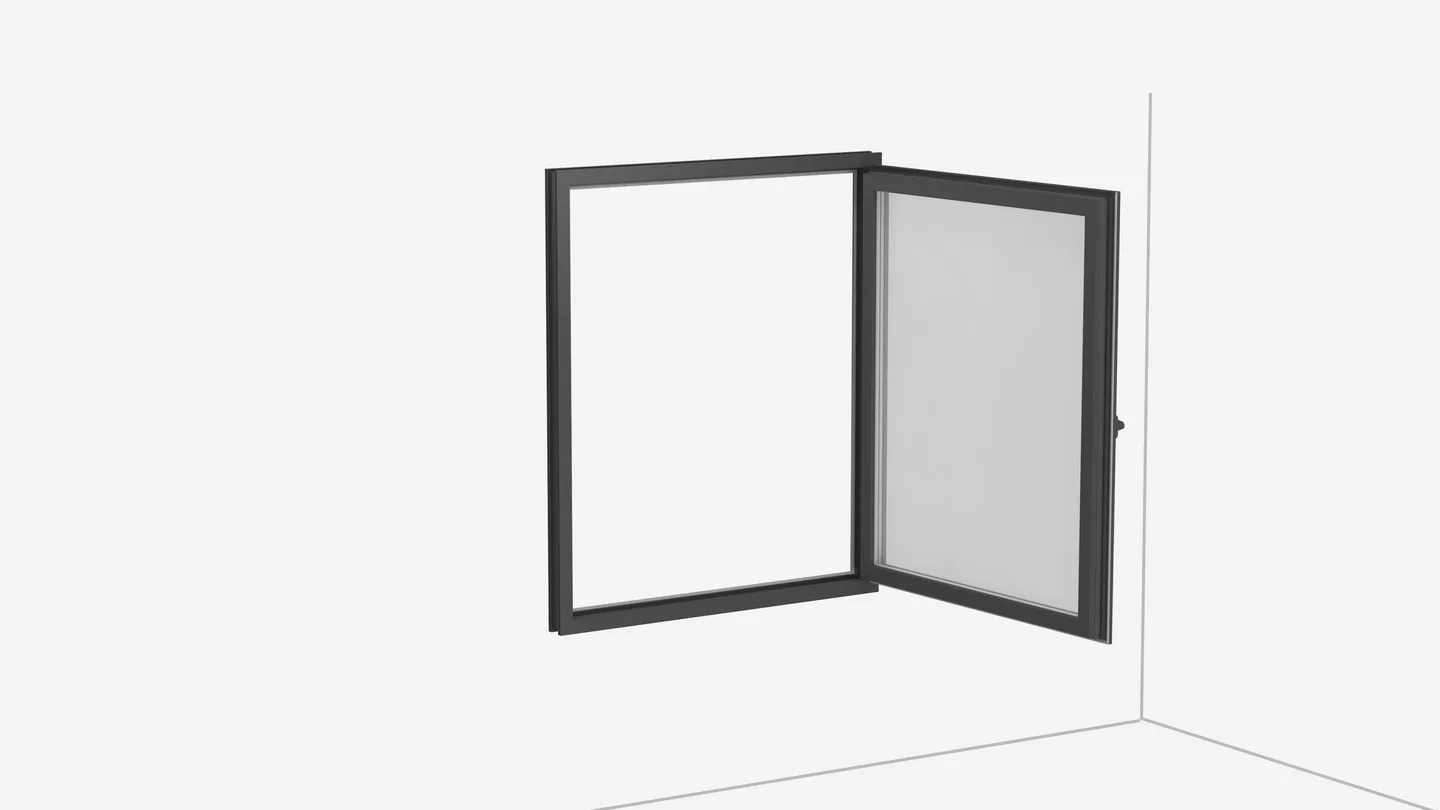
A double-glazed uPVC tilt-and-turn window gives you a smaller opening for everyday air and a wider opening at other times, both in one sash. It is worth considering for a bedroom, study or living room with space for the window to open inwards.
You can change how the room is ventilated without choosing two separate window styles. The turn mode also brings the sash into the room, which can make parts of the outside glass easier to reach, depending on its size and position.
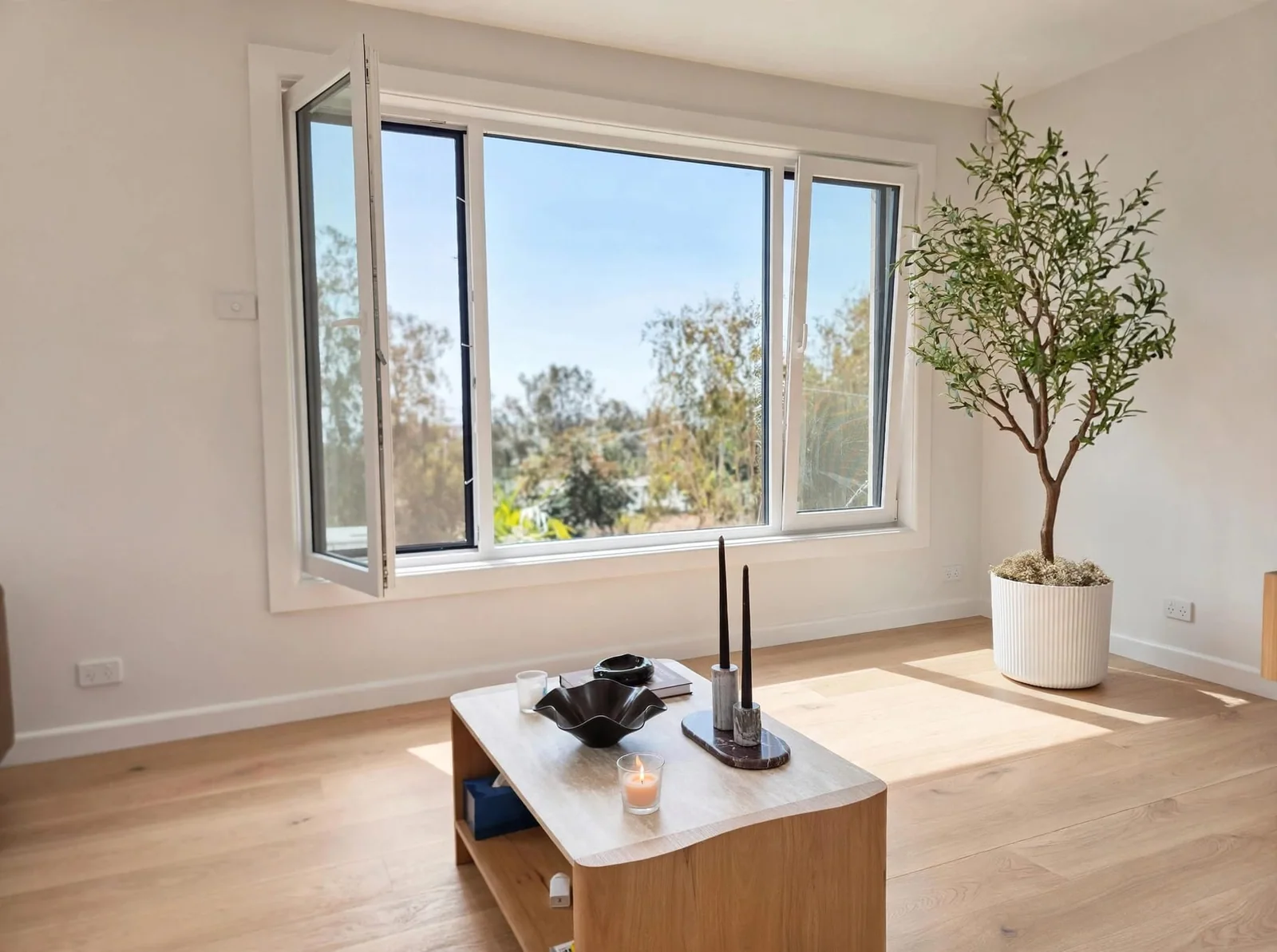
In tilt mode, the top of the sash leans into the room. In turn mode, it swings inwards on side hinges. Close the sash before changing modes. The illustrations show both movements and a combination with a fixed lower pane.
Follow the moving pane and compare the opening arrangements.
Tilt for a smaller opening, or turn the sash inwards.
The upper sash opens. The lower pane stays fixed.
A tap, blind, curtain or desk can interfere with the opening. Discuss those details, screens and any opening restrictions before agreeing the design. Cleaning access still depends on the window’s position; an inward-opening sash does not make every window safely reachable.
That depends on where the blinds sit and the proposed sash movement. Include them in the measure and design discussion before the window is made.
Tilt is one of the two ways a tilt and turn window opens. If you want a window that only tilts, say so when you enquire.