
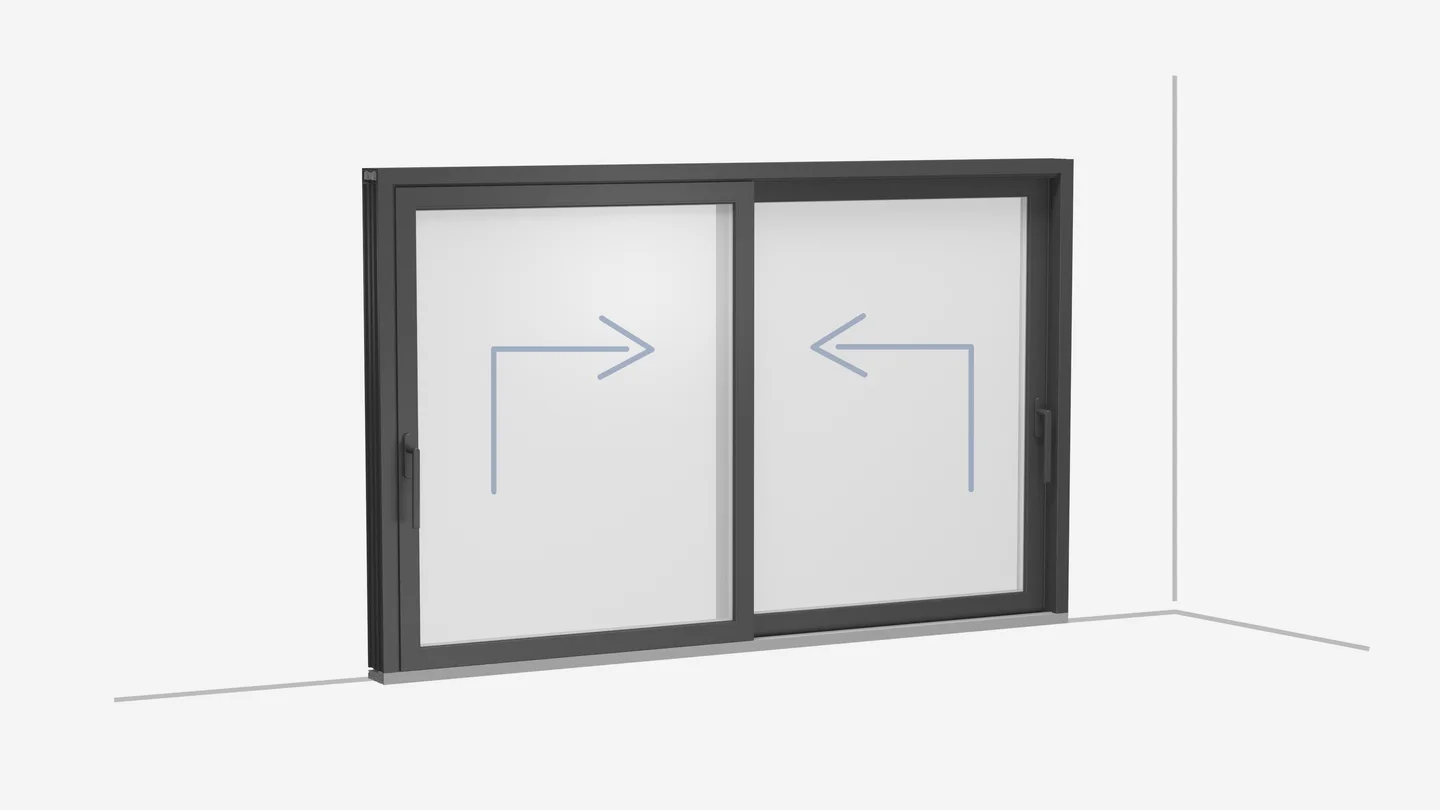
Two-panel lift and slide
One panel slides across the other; the shown cycle opens the left side.
Lift-and-slide uPVC doors use a lifting mechanism to move broad glazed panels. Compare them for a large, frequently used garden opening.
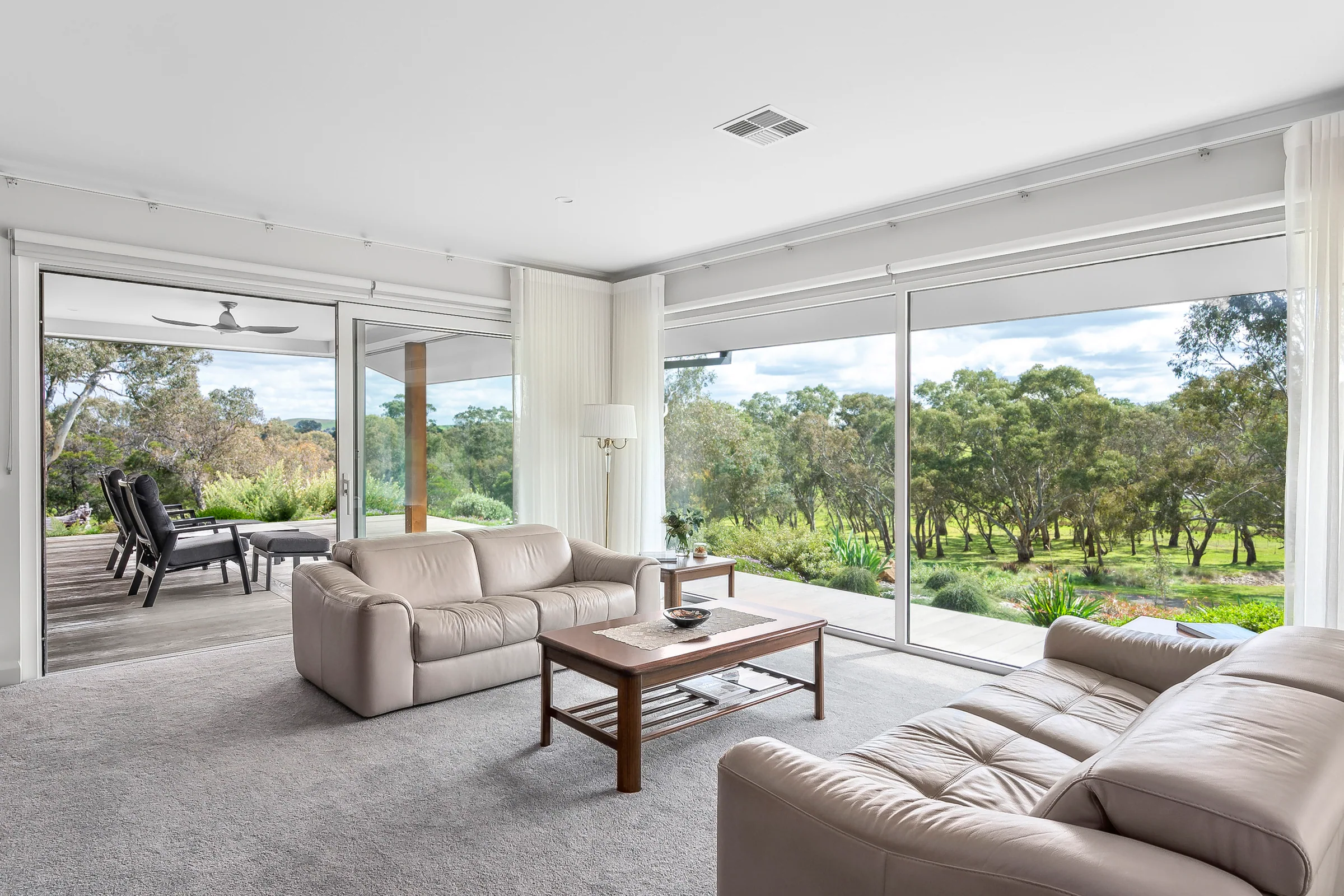
If the garden view is central to your renovation, lift and slide is worth seeing before choosing a conventional sliding door. It is particularly relevant when you want substantial glazed panels and expect to use the opening every day.
The mechanism is designed to help a heavy glazed panel travel on its running gear. You keep the wide outlook when closed, and the moving leaf slides beside the neighbouring panel without a hinged swing into the living room or terrace.
Turning the handle engages the lifting mechanism so the sash can slide. Returning it to the closed position lowers the sash into its sealing position. The illustrations show the panel travel in different layouts; they do not demonstrate the effort required to operate the handle.
Follow the moving pane and compare the opening arrangements.
One panel slides across the other; the shown cycle opens the left side.
The opening panel slides across the fixed panel.
The centre panel slides across the right-hand fixed panel.
The centre pair slide apart across the fixed outer panels.
Ask to compare the handle action, panel movement and clear opening with an ordinary slider. Consider where the opening should sit relative to the furniture. Threshold height, drainage, screens and the available panel sizes need to be settled for your particular project.
Lift and slide is a different hardware choice, not simply another name for a sliding door. For a large opening used often, the way the panel moves may be a priority. For a smaller or less-used doorway, an ordinary slider may meet the brief. Compare both against the same opening, glass and installation scope before deciding.
Not necessarily. Some arrangements combine a moving leaf with fixed glass; others have more moving panels. Choose the clear passage and view you want, then compare the appropriate configurations.