
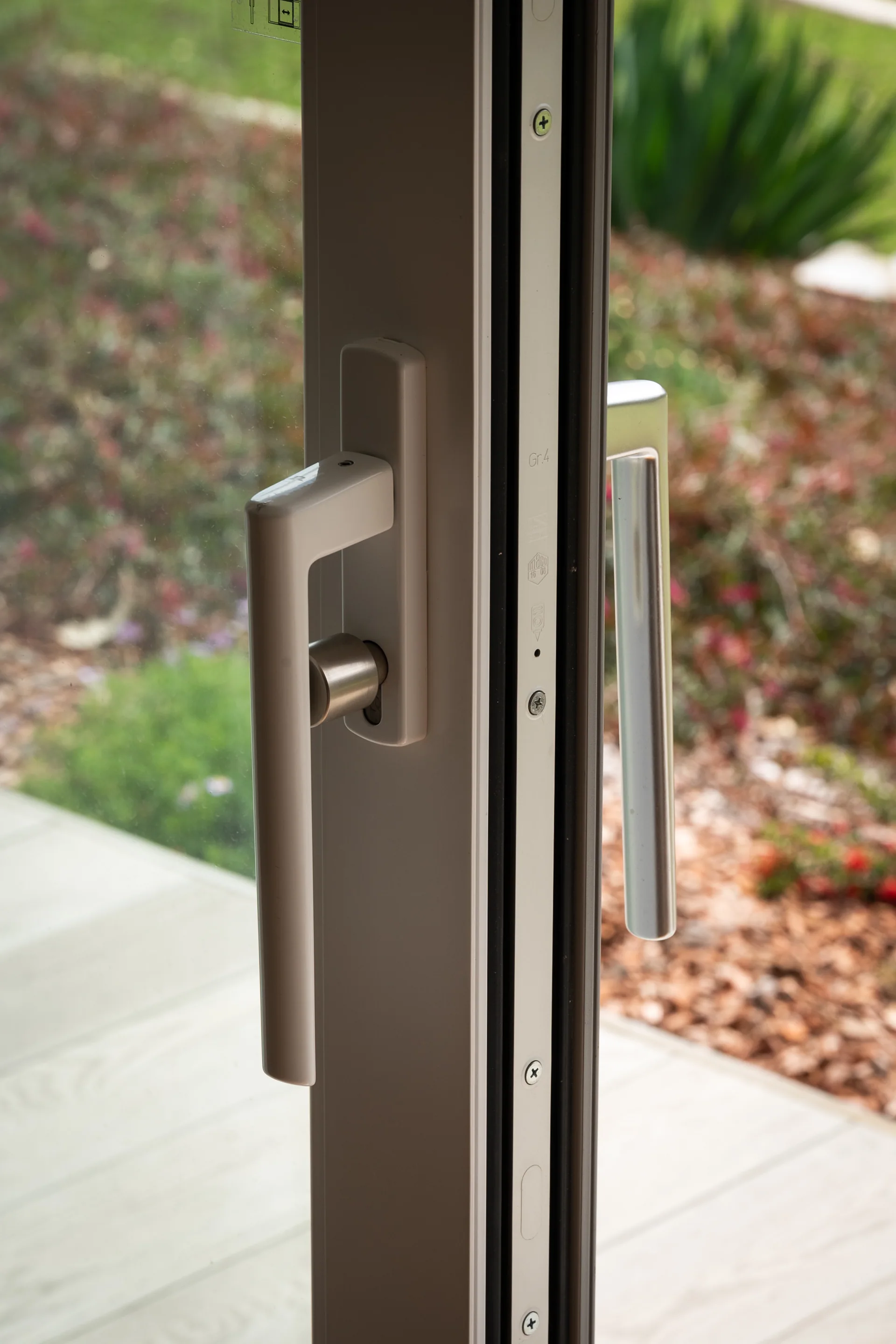
Separate the frame material from the glass choice
uPVC is unplasticised polyvinyl chloride, used to form the window frame and sash profiles. Double glazing describes the sealed glass unit fitted within that system. One term does not replace the other.
When reviewing a quote, identify the proposed frame system and glazing together. The product name alone does not establish the performance of every size, style or glass combination.
Insulation with less frame maintenance
uPVC frames conduct less heat than conventional aluminium frames without a thermal break. That helps limit heat transfer around the edge of the glass, making the frame a useful partner to an insulating glazed unit.
The material also needs relatively little maintenance. Cleaning and care of seals, tracks and hardware still matter; follow the instructions for the selected finish. Compare complete-window ratings when choosing between uPVC, timber or thermally broken aluminium.
Choose the way it opens around the room
The range includes different opening arrangements, from fixed and sliding windows to side-hinged and tilt-and-turn styles. Compare the movement against the furniture, blinds and space outside.
If you are replacing several windows, you can retain a consistent finish while using different opening styles where they make sense. A fixed garden view and an opening bedroom window have different jobs.
Look closely at the frame in the house
A frame that looks right on a small sample can have a different visual effect across a broad opening. Consider the visible frame width, pane divisions and finish against the existing brickwork and interior trim.
Bring a full façade photograph, not just a close-up of one window. For a renovation with a designer, compare the window schedule and elevations before the final selection.
Ask about care and the actual product specification
Request the care instructions for the selected finish, glass, seals and hardware. Regular access for cleaning and track care should be practical in the room. “Low maintenance” should never be read as “nothing to look after”.
For an energy or acoustic requirement, use data for the proposed complete window. A certificate applies to the system and configuration it describes, rather than to every window sold under a brand name.